This research was done as part of the Baking Guide in March-Oct 2025
Bakers use a variety of salts, but for this research we have focused on the three most common: finely ground salt (table salt), white coarsely ground salt (sea salt/rock salt) and pink salt (Himalayan salt).
Issues
Salt used in New Zealand comes from both local and imported sources.
Locally, Dominion Salt produces some of our salt at Lake Grassmere in the South Island. Imported salt is mostly from Australia (93% in 2024 according to Trade data). New Zealand and Australia are countries with strong labour laws and we have not come across any cases of forced labour in the salt industries for these countries. Based on this we consider locally produced salt, and the majority of imported salt, to be slave-free.
Child labour is known to be used in the salt industries of Afghanistan, Bangladesh and Niger. There are also reports of child labour in salt in Cambodia. There have been cases of forced labour in recent years in the South Korean salt industry. In addition, Himalayan salt is primarily sourced from Pakistan, where children are legally permitted to do hazardous work (such as salt mining) from the age of 14. The ILO prohibits hazardous work for children under the age of 18, so we consider all Himalayan salt at risk of having child labour in its supply chain. In addition Walkfree classifies Pakistan as a high risk country with respect to modern slavery, and there have been reports of child labour in the salt solar evaporation pools in Pakistan.
Recommendations
Table salt and rock salt/sea salt
We have not found any brands importing salt from Afghanistan, Bangladesh, Niger, Cambodia or South Korea, so we consider all table salt and sea salt/rock salt to be at low risk of slavery in its supply chain.
Pink salt/Himalayan salt
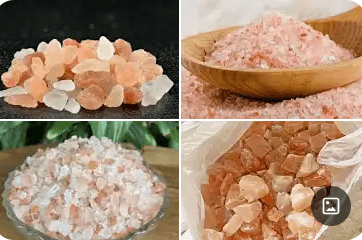
We have contacted Mrs Rogers, Pams and Cerebos to ask about the presence of child and forced labour in the supply chains of their pink salt. At time of writing, neither Pams nor Cerebos have responded. Mrs Rogers packets of Himalayan Pink salt carry the statement “Produced in Pakistan without child labour”. When we asked them for clarification as to what that meant, they forwarded us the following statement from their supplier:
We hereby certify, that our Rock Salt supplies to ROGERS DISTRIBUTION LTD is 100% Natural and free from any chemicals or additives. No Child Labor is practiced at our factories. Our Salt Mine is situated at “Salt Range” area off shoot Himalayan Mountains and our mining processes are carried out without damaging the Natural environment.
This appears to state that their factories are free of child labour, but makes no claims to their mines being child labour free. Based on this we disagree with Mrs. Rogers and believe they cannot be confident their salt is produced without child labour.
We have thus found no Himalayan pink salt products we can recommend as being slave free.
--------------------------
- Table salt: Low-risk for forced labour as most brands seem to be using either NZ or Australian salt.
- Sea salt / rock salt: Mostly low-risk for forced labour, however it depends on where the salt comes from. If it is from a country other than NZ or Australia this may be higher risk. See more info below under Recommended products.
- Pink salt / Himalayan salt: High-risk for forced labour and child labor. See more info below under Pink salt (Himalayan salt).
So the next step was to look at what salt is on sale in NZ for baking purposes. We thoroughly searched online, examined supermarket shelves and wrote to a number of brands. Here we share our findings with you:
Recommended products
Finely ground salt (Table salt)
Pams, Essentials and Cerebos
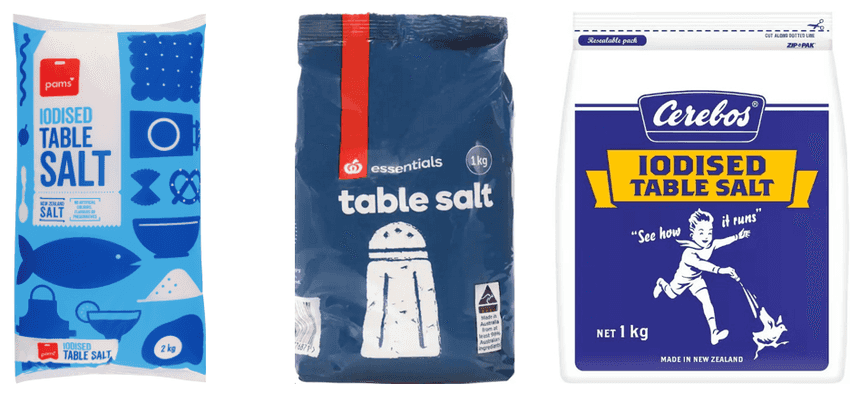
All Pams, Essentials and Cerebos salt is Aotearoa New Zealand or Australian harvested salt. They come in a wide range of sizes at all major supermarkets and many more locations. The other ingredients are Anti-Caking Agent (554), Potassium Iodate. Both are very small percentages and we have not researched their sources.
White coarsely ground salt ( Sea salt/rock salt)
Cerebos
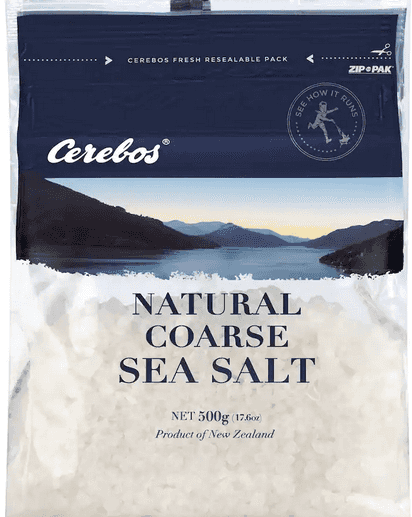
All Cerebos salt products come from Aotearoa/New Zealand or Australia and are available at all the main supermarkets.
Opito Bay
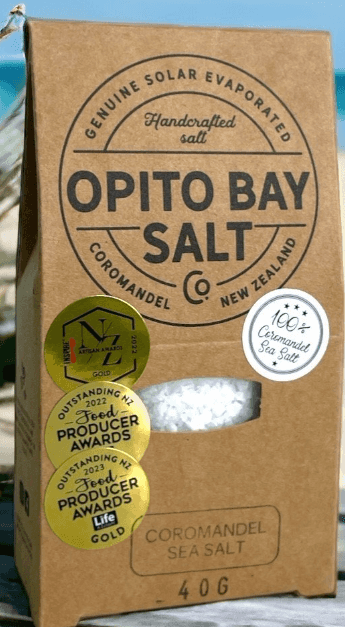
Opito Bay salt comes from Opito Bay Coromandel Aotearoa New Zealand. It is available from a range of stockists including farmers markets, cafes and specialist grocery stores.
Mrs Rogers
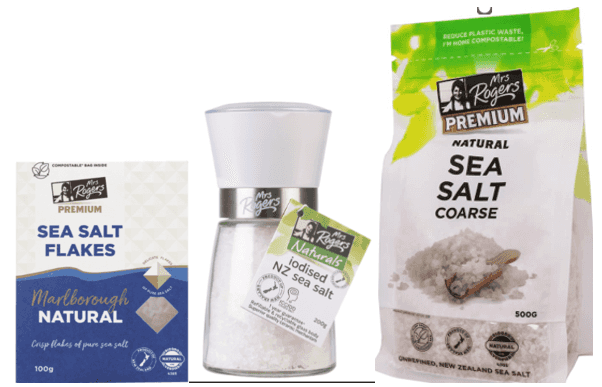
Every Mrs Rogers product carries the circle logo with the map of NZ surrounded by the words 100% owned and operated but only some of Mrs Rogers salt products come from Aotearoa New Zealand - check the labels for the words that indicate New Zealand is the source. The above products are sourced from Aoteoraoa New Zealand and are available at all the main supermarkets and in some smaller stores.
Ceres
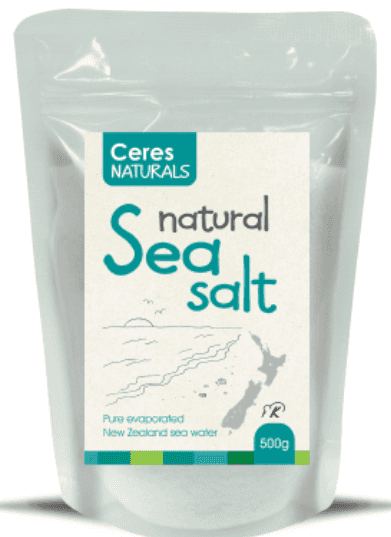
Ceres Organics produces Ceres Natural Sea salt from Aotearoa New Zealand sources. This product is available from New World.
Culley’s Pantry
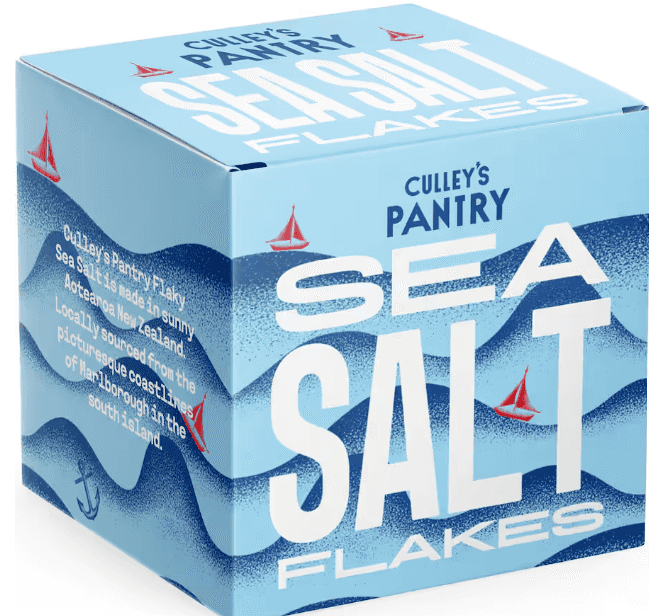
Culley’s Pantry Sea flakes are made in Aotearoa New Zealand and available in this 100g box from Woolworths and New World
Woolworths coarsely ground sea salt
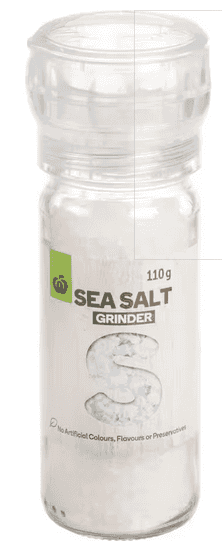
The label on this product states packed in South Africa with salt from South Africa and Belgium. The Global slavery index categorizes South Africa as moderate and Belgium as low for prevalence of modern slavery. We haven’t found any evidence of forced labour in salt production in these countries therefore we consider this Woolworths product slave free.
Items we have insufficient information about to recommend
Tata
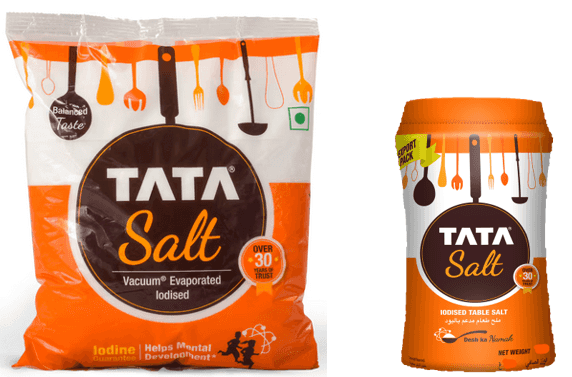
TATA salt is available in some Pak n Save’s in two sizes. It is produced in India by the TATA salt company. India is a country where child labour and forced labour frequently occur. Child labour in salt production is reported to occur in Gujarat, India. In a 2016 newspaper article and a 2022 BBC film clip, members of the older generation talk about the lack of money to send their children to school and a lack of opportunity for the younger generation to do anything other than follow in their harsh menial existence harvesting salt.
TATA salt is part of TATA Consumer Products (TCP), a company that is involved in a range of food products eg tea,coffee, oils,herbal supplements. TCP produces an annual Modern Slavery Statement. The 2024 statement did give details about some good steps they are taking to reduce their risk of having forced labour in their supply chains:
- all suppliers must adhere with TCP’s Business and Human Rights Policy at all times and comply with its salient human rights including no child or forced labour.
- all direct employees are screened for age, they have a policy of no child or forced labour.
- they have a whistleblower helpline for reporting issues. In the 2023 reporting period it wasn’t used.
- 67% of non-tea suppliers have signed their supplier code of conduct, which includes child/forced labour provisions. Unfortunately they do not list which suppliers have signed in the statement so we cannot tell is any of the TATA salt suppliers have signed it.
- they have internal audits of some kind to look at breaches of the supplier code of conduct
There is no statement specifically for TATA Salt and so we are unable to be convinced that there is no forced labour or child labour in the production of their products. They also don’t make any comment about external auditing with respect to forced labour and child labour. We are unable to recommend these products at this time but we will keep a watch on their future reports.
Mrs Rogers Mediterranean salts
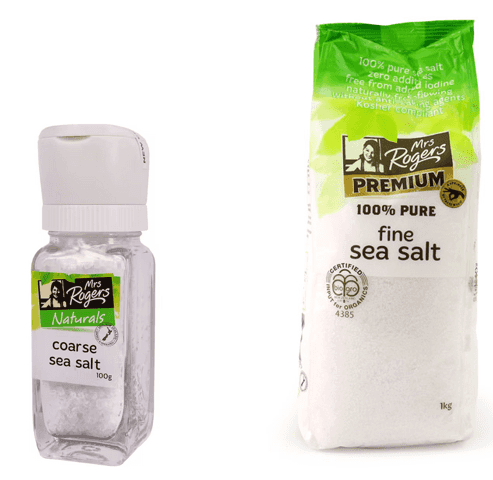
Mrs Rogers has a mix of salts from the Mediterranean which includes production in countries that are high risk for forced labour. Turkey produces salt and it has the highest prevalence of modern slavery in Europe and Central Asia. We have reached out to Mrs Rogers regarding the source of some of their salt products but to date have not received any written response. Be aware the circle logo with the map of NZ surrounded by the words 100% owned and operated does not mean the salt is always from NZ - look for the fine print elsewhere on the label indicating when the salt is from Aotearoa New Zealand.